
Product Description Examples by Niche: Fashion, Jewelry, Shoes and Home
Four product description examples from four niches, each shown as supplier copy and then rewritten the way they should be, with what changed and why.
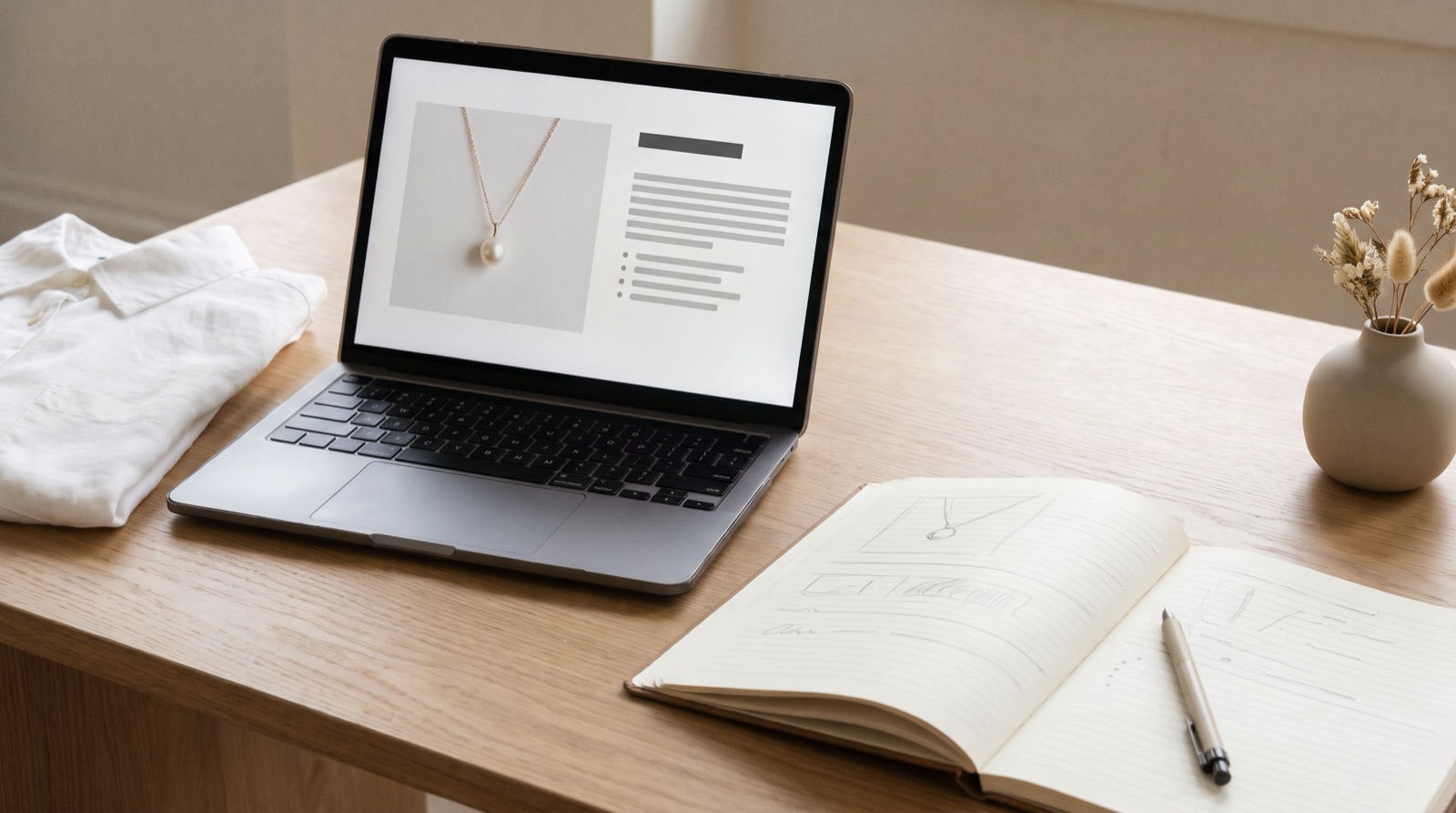
A shopper can't pick your product up. They can't feel the fabric, check the size or see how it sits on a shelf. Your product description has to do all of that for them. It's the closest thing your store has to a salesperson.
It has a second job too. The description is what Google reads to work out what you sell, so thin or copied text gives it nothing to go on. That's why product descriptions matter for both sales and search.
Here are some product description examples from four products from four niches, each shown the way a supplier or a lazy template would write it, then rewritten the way we recommend it should be written.
In this blog, we'll focus on clothing, jewelry, shoes, and home goods. Same products, very different descriptions.
The products and specs below are made-up examples. Swap in your own real details.
What the good ones have in common
Before the examples, the pattern. Every "after" below does the same four things:
Opens with the buyer, not the product. One line on how it looks, feels or gets used.
Answers the questions a shopper can't ask. Size, fit, weight, what it holds, how it sits. They can't pick it up, so the page has to do it for them.
Uses real specs in a scannable list. Short lines, one fact each.
Sounds like one person wrote it. Yours. Not a supplier's keyword pile.
If you want the full method behind this, read our guide on how to write a great product description.
Clothing example: a linen shirt
Before (typical supplier copy):
Women's Casual Linen Blend Shirt Loose Fit Button Down Long Sleeve Summer Beach Top. Material: linen blend. Size: S-XL. Color: white, sage, sand. Package includes: 1 x shirt.
After:
The shirt you'll reach for every morning from June to September. It's cut loose through the body with a cuffed sleeve, and the linen-cotton blend gets softer every wash. Wear it buttoned over a swim top, open over a tank, or tucked into jeans.
Fabric: 55% linen, 45% cotton, midweight
Fit: relaxed, true to size. Model is 5'8" and wears a S
Colors: white, sage, sand
Care: machine wash cold, hang dry
What changed:
The title keywords are gone from the body. They belong in the product title and SEO fields, not the copy.
It tells you three ways to wear it. Fashion shoppers buy outfits, not garments.
Fit gets its own line, with the model's height and size. That one line cuts more "will it fit?" emails (and returns) than any adjective.
Jewelry example: a pearl necklace
Before:
Women's 925 Sterling Silver Pearl Necklace Pendant Fashion Jewelry Gift for Her Girlfriend Mom. Hypoallergenic, adjustable chain.
After:
A single freshwater pearl on a fine sterling silver chain, sitting just below the collarbone. Small enough for every day, polished enough for a wedding.
Pearl: 8mm freshwater. Each one is slightly different
Chain: 925 sterling silver, adjustable 16 to 18 in
Clasp: lobster
Comes in a gift pouch
Care: keep away from perfume and water, wipe with a soft cloth
What changed:
Jewelry is tiny on a screen, so the copy says where it sits and how big the stone is. Millimeters matter here.
"Each one is slightly different" is honest and turns a flaw into a feature.
The gift keywords ("for her, girlfriend, mom") are gone. They read like spam. A gift pouch line does the same job.
Writing for a jewelry store? We went deeper in how to write product descriptions for jewelry.
Shoes example: a leather Chelsea boot
Before:
Women's Chelsea Boots Ankle Booties Low Heel Slip On Elastic Side Casual Winter Shoes for Women. Upper: PU/leather. Sole: rubber. Size: 5-11.
After:
An ankle boot you can walk in all day. The leather is soft from the first wear, and the elastic side panels and pull tab mean it slips on without a fight. A low block heel and a grippy rubber sole handle wet pavements.
Upper: full-grain leather, leather lined
Fit: true to size. Between sizes, or wearing thick socks? Go up a half
Width: regular
Heel: 1.5 in block
Shaft: 5 in, sits just above the ankle
Colors: black, tan
Care: wipe clean, condition the leather twice a year
What changed:
Fit is the question every shoe shopper has, so it gets a straight answer: true to size, and what to do if you're between sizes.
Heel and shaft height are in inches. "Low heel" means something different to everyone.
"PU/leather" became one exact material. A vague material line reads like you're hiding something.
It says what the boot is like to walk in and wear in the rain. A photo can't show that.
Home goods example: a ceramic vase
Before:
Ceramic Vase Nordic Style Flower Pot Home Decor Living Room Table Decoration Modern Minimalist.
After:
A matte ceramic vase that looks good with flowers and just as good empty. Glazed inside, so it holds water.
Size: 9 in tall, 4 in opening
Holds: three or four eucalyptus stems, or a handful of dried pampas
Weight: 2 lb, so it won't tip
Colors: oat, charcoal
Sits well on a console, shelf or dining table
What changed:
Home shoppers are picturing a room. The copy says what fits in it and where it goes.
Practical facts (water-tight, weight) answer the questions that stop a sale.
Size is in inches, with the opening called out. "Medium" tells nobody anything.
SEO product description examples
A good description is only half the page. The SEO fields need to be done right as well.
Here they are for the pearl necklace:
SEO title: Freshwater Pearl Pendant Necklace, Sterling Silver
Meta description: A single 8mm freshwater pearl on an adjustable 925 sterling silver chain. Small enough for every day, comes in a gift pouch.
Image alt text: Single freshwater pearl pendant on a sterling silver chain, worn at the collarbone
Notice the keywords live in the title, meta description and alt text for your product images.
Check your own descriptions
Pull up your three best sellers and ask:
Could a shopper guess the size without leaving the page?
Is there a single fact in the first line, or only keywords?
Is the same text on a dozen other stores? If you import from a supplier, probably yes. Here's how to rewrite supplier descriptions.
Need help writing? Try the MerchantFloor product description writer
Writing one description like this can takes ten minutes. Writing 300 of them takes a month!
The MerchantFloor product description writer does the heavy lifting. Give it a product name and a few details, or upload a CSV of your whole catalog, and it writes the copy in your own brand voice. For every product you get:
A product description that sounds like your brand
An SEO title and meta description
Buyer FAQs (these also help you rank in AI search/recommendations)
Bulk output from a CSV, then import it back to Shopify
It costs 1 credit per description, and you get 25 free credits to start.
Try the product description writer for free. Run your weakest product through it and compare the result to what's on your page now.
Frequently Asked Questions
Share this article
Related Articles
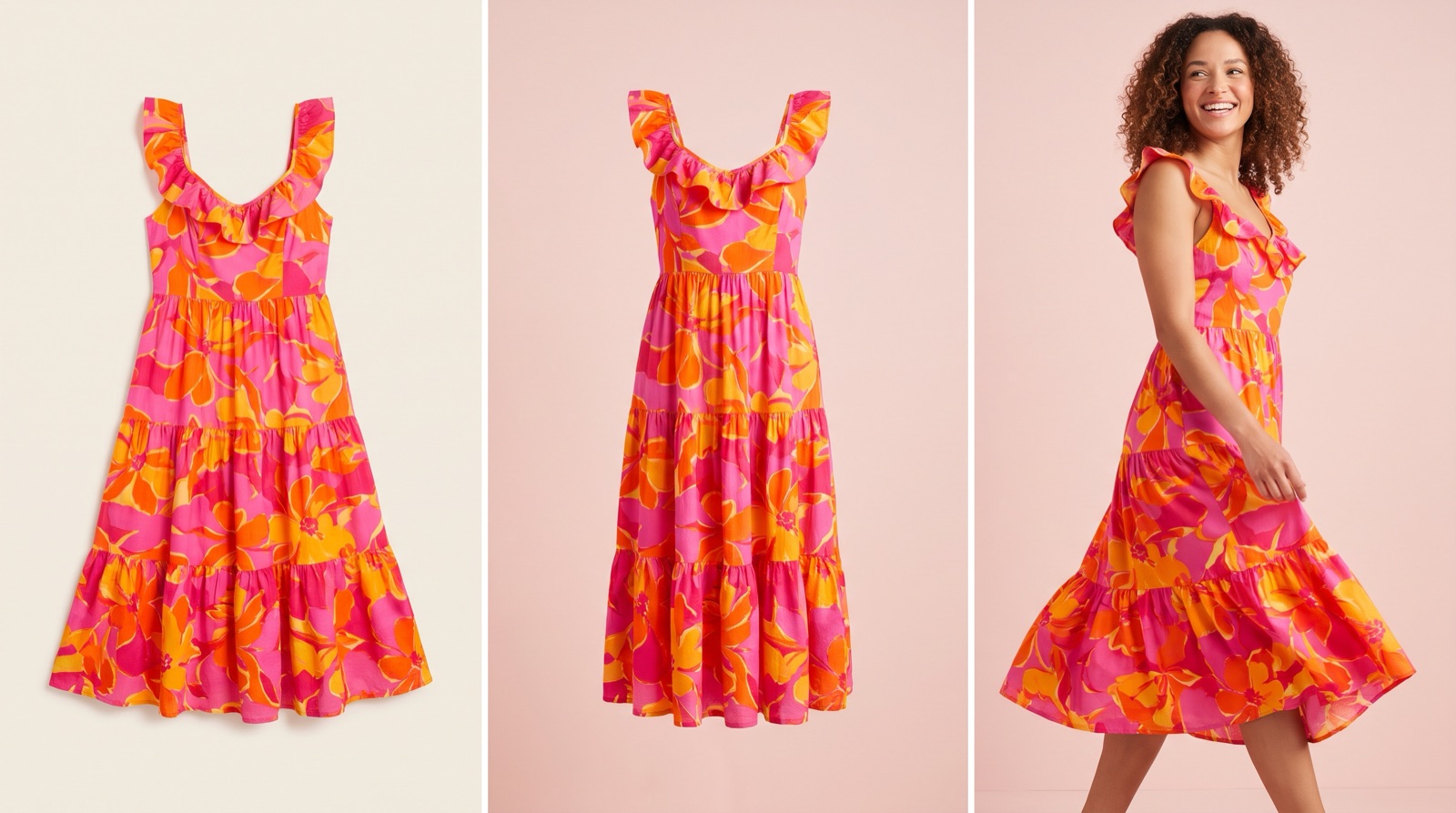
Flat Lay vs Ghost Mannequin vs On-Model: Which to Use
Which photo format should a small clothing or jewelry brand use? What flat lay, ghost mannequin and on-model photos show, what they cost and where AI fits.
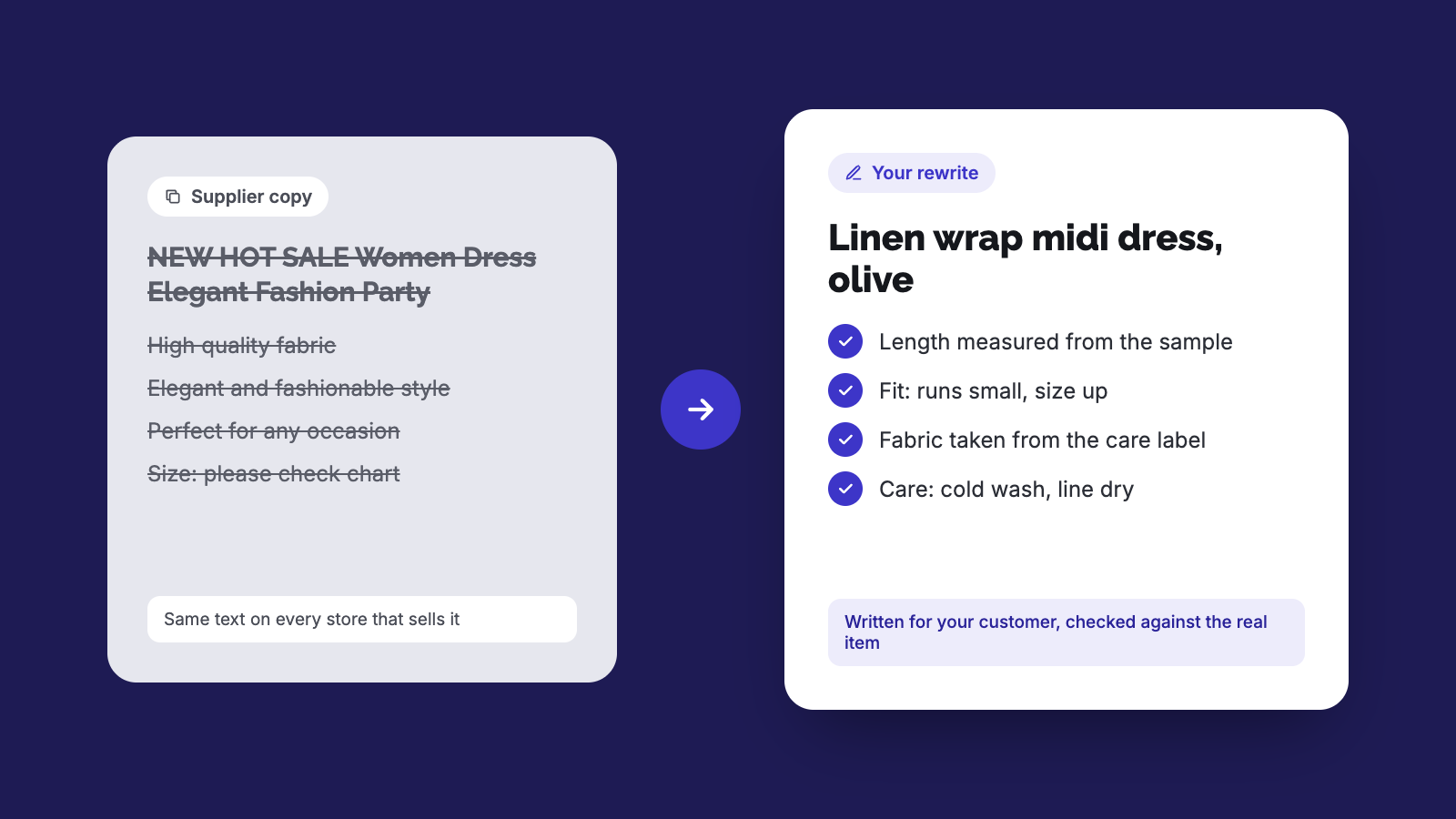
How to Rewrite Supplier Product Descriptions with AI (Steps)
Copied supplier text won't get your store penalized, but it won't rank or sell either. Here's a step-by-step way to rewrite it and check the specs.

On-Page SEO for Ecommerce: Tips, Examples & Checklist
A practical guide to on-page SEO for ecommerce: what to change on category and product pages, with a real “floral skirts” example and a checklist.