AI Product Photo Rules for Every Marketplace (2026)
No major marketplace bans AI product photos, but each has its own rules on accuracy, labels and metadata. See what Amazon, Etsy, eBay, Walmart, TikTok Shop, Google, Meta, Pinterest and Shopify expect before you list.
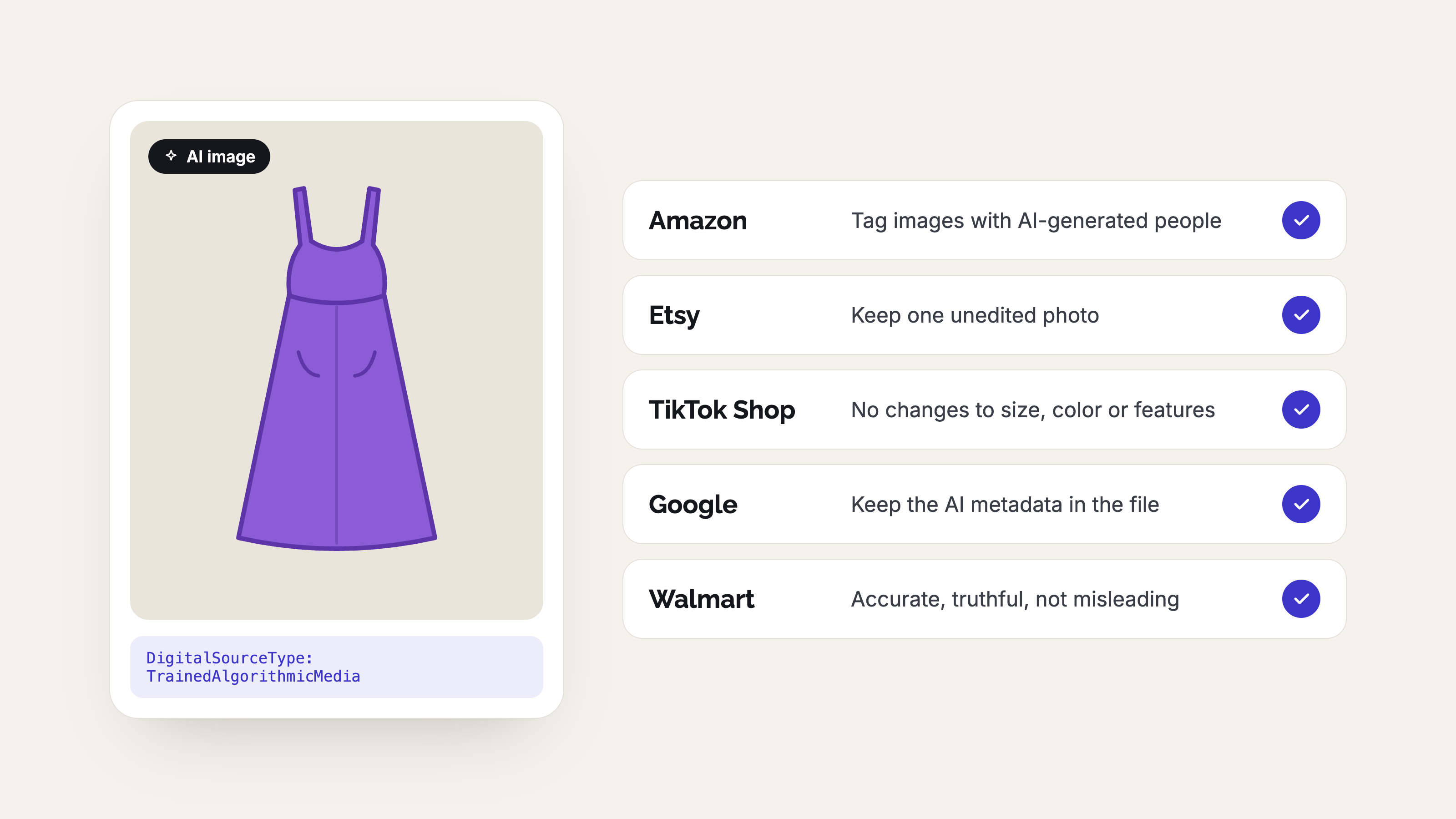 Short answer: None of the major marketplaces ban AI product photos, but all of them expect the photos to show the product accurately. Etsy wants one unedited photo, Google Shopping needs AI metadata in the file, TikTok Shop bans AI changes to size or color, and Amazon requires a tag on images with AI-generated people.
- Every marketplace expects AI product photos to match the item the buyer actually receives, including size, color and features.
- Etsy requires at least one unedited photo of the item against a real background in each listing.
- Amazon requires the keyword contains-synthetic-performer in the XMP dc:subject field of any image or video with a photorealistic AI-generated person.
- Google Shopping, Meta and Pinterest label AI images using file metadata or their own detection, so don't strip metadata when compressing images.
Rules checked October 24, 2026. They change often, so use the links below to check the current version before you list.
What rule do all marketplaces share?
The photo has to match what the buyer receives. Walmart says "all claims, images, and descriptions must match the actual product including size, color and other features" (Walmart). eBay doesn't allow "photos that don't accurately represent the item" (eBay). Most of the other rules below are more specific versions of that one.
What are the AI photo rules on each marketplace?
Marketplace | AI photos allowed? | What you need to do | Learn more |
|---|---|---|---|
Amazon | Yes, if accurate | Images must follow Amazon's product image guide. Any image or video with a photorealistic AI-generated person needs the keyword | AI-person tagging announcement · How to tag AI people · Product image guide |
Etsy | Yes, with conditions | Include at least one unedited photo of the item against a real background. AI can't change color, texture, condition or design. Etsy flags suspected AI images when you list. | |
eBay | No AI-specific rule found | Photos must accurately represent the item. No stock photos for used, damaged or defective items, and no added text or artwork. | |
Walmart | Yes | AI images "must be truthful, accurate and not misleading." The main image needs a pure white background (2200 x 2200 px recommended) and can't show accessories that aren't included. | |
TikTok Shop (US) | Yes, if it shows the real product | AI can't change size, color, shape, features or performance. No false scale, no different SKUs or bundles, no fake glow or motion effects. | |
Google Shopping | Yes | Keep the IPTC | |
Meta (Facebook, Instagram ads) | Yes | Ads made or significantly edited with Meta's AI tools get an "AI info" label. Meta says it will also detect ads made with other AI tools. | |
Yes | Pinterest adds an "AI modified" label when the file's IPTC metadata or its own detection shows AI was used. | ||
Shopify (your own store) | No AI-specific rule found | You're responsible for accuracy, so review everything AI makes. |
Do I have to label AI product photos?
On some platforms, yes. Etsy says sellers must disclose when an item is created using AI and recommends noting AI photo edits in the listing description (Etsy). TikTok asks you to label content that's fully or significantly made or altered with AI, either on screen or with its AI-generated content toggle, and says the toggle alone won't get your content demoted (TikTok Shop). Google, Meta and Pinterest rely on metadata or their own detection, so don't strip metadata when you compress images. Amazon has the most specific rule: any product image or video with a photorealistic AI-generated person must have the keyword contains-synthetic-performer in the file's XMP dc:subject field before you upload it, and Amazon will show shoppers an indicator (Amazon Seller Forums). Photos of real people edited with AI, and images with no people, don't need the tag. I didn't find a labeling rule on eBay, Walmart or Shopify.
If you use AI models, watch California. Etsy points to SB 1050, starting January 1, 2027, which may require a clear disclosure when listing images prominently feature an AI-generated person (Etsy). I'm not a lawyer, so check whether it applies to you.
How do I stay within the rules on every channel?
Keep one unedited photo of the real product in every listing
Compare each AI image with the product for size, color, shape and features
Don't show accessories, bundles or quantities the buyer won't get
Keep the AI metadata in your image files, and on Amazon add the contains-synthetic-performer tag to images with AI-generated people
Note AI edits in the description on Etsy
Turn on TikTok's AI-generated content toggle when AI made or significantly changed the content
Recheck these policies every few months
Frequently Asked Questions
Share this article
Related Articles
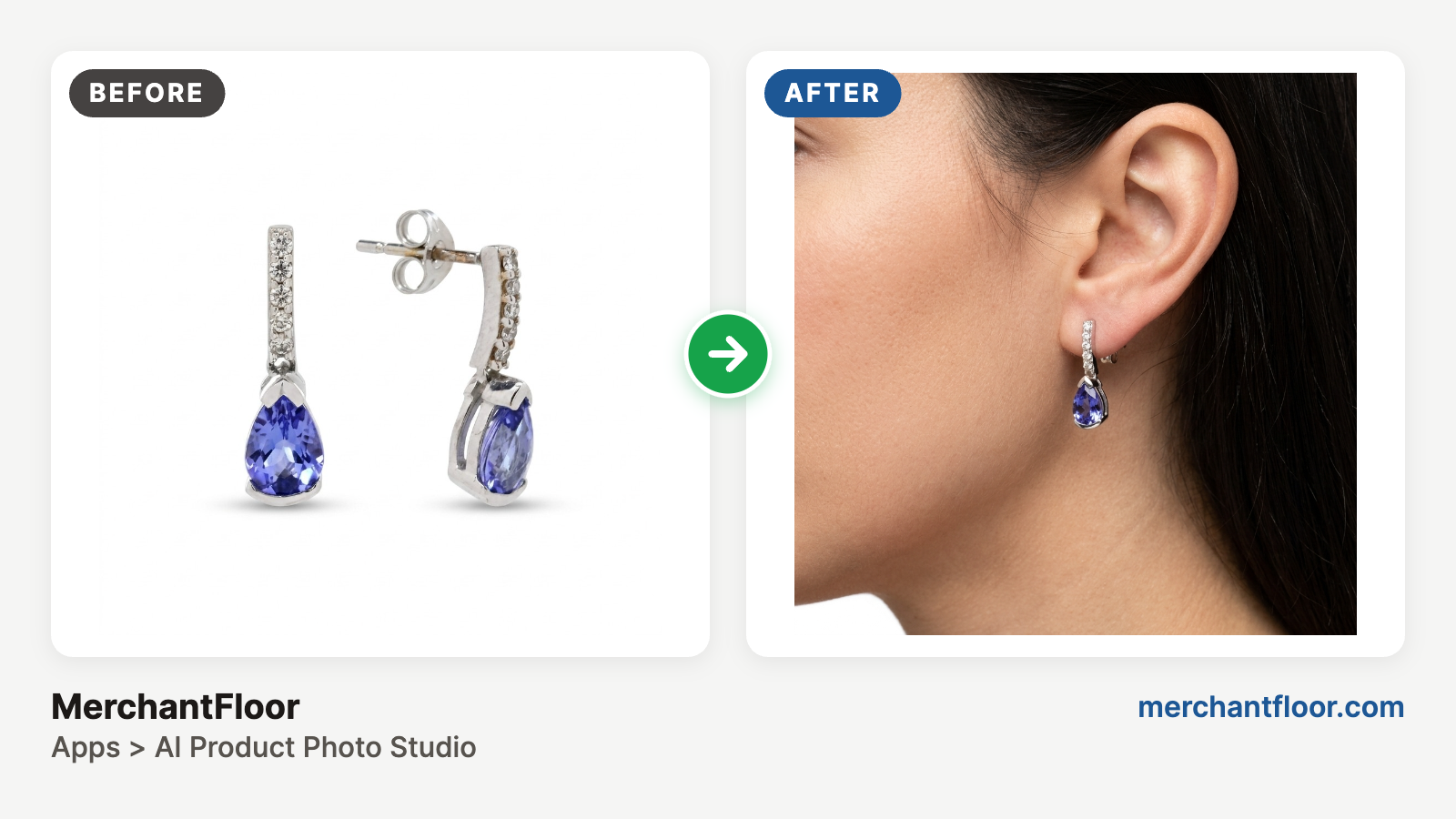
AI + Your phone: Jewelry product photos on a budget
Jewelry is the hardest product to photograph: glare, reflections, blur and dust. Learn a simple phone-plus-AI workflow for clean product shots and on-model photos without a studio.

Shopify vs. Wix vs. Squarespace: which e-commerce platform should you choose?